
Lenin Movie Review:
Period dramas with themes of friendship, betrayal and revenge have become a familiar trend in Telugu cinema. Films like Rangasthalam, Pushpa and the recent Peddi are all set against the backdrop of the 1980s or 1990s and revolve around village festivals and revenge. Joining that list is Akhil Akkineni's Lenin, which hit the screens on Friday. Set in the late 1990s, the film revolves around a village festival and is directed by Murali Kishor Abburu. Produced by Akkineni Nagarjuna and Naga Vamsi under the Manam Enterprises LLP and Sithara Entertainments banners, Lenin is Akhil's return to theatres after a three-year gap following Agent. Has it lived up to the expectations?
Director: Murali Kishor Abburu
Cast: Akhil Akkineni, Bhagyashri Borse, Brahmaji, Sivaji, Sunil, Eswari Rao, Pramod, Ramesh Indira, Rangasthalam Mahesh, Saranya Pradeep and others
The story is set in Sriramapuram, a village in Chittoor district during the 1990s. Every year, the villagers celebrate the Draupadi festival with great devotion. During the two-week festival, they believe that not a single drop of blood should be spilled in the village, as it would bring misfortune.
Lenin (Akhil Akkineni) is an orphan who is raised by Jayanthi (Eswari Rao), a wealthy woman who treats him like her own son alongside her biological son Vasanth (Pramod). While making arrangements for the festival, Lenin falls in love with Bharathi (Bhagyashri Borse). Meanwhile, Vasanth is engaged to Bharathi's elder sister Vaidehi. However, a day before the wedding, Vaidehi elopes with her lover. To save the family's honour, Bharathi's father (Ramki) decides to marry Bharathi to Vasanth instead.
During the wedding ceremony, Bharathi shocks everyone by revealing that she loves Lenin. Respecting her decision, Vasanth himself arranges Lenin and Bharathi's marriage. Just when everything appears to be perfect, village politics, betrayal, hidden agendas and revenge begin to unfold. What exactly happens, why everyone changes their behaviour and how Lenin fights back forms the rest of the story.
Director Murali Kishor Abburu, who made his debut with Vinaro Bhagyamu Vishnu Katha set in Tirupati, once again chooses the Chittoor backdrop. The film effectively captures the local dialect and rural atmosphere. The Draupadi festival is grandly presented and becomes an integral part of the narrative.
However, the film takes far too much time to establish the love story between Lenin and Bharathi. Nearly the first hour is spent introducing characters and village life, while the main conflict barely moves forward. The screenplay feels sluggish, with several unnecessary scenes slowing down the narrative. The large number of characters further complicates the storytelling, and many of them remain underdeveloped.
Murali Kishor repeatedly draws references from the Mahabharata. Just as the epic begins and ends with a dog, the director appears to mirror that idea by introducing and concluding Lenin's journey with a dog. While the symbolism is interesting, the overall story eventually turns into a predictable revenge drama filled with prolonged scenes.
One major issue is the interval sequence. When Lenin beheads one of the main antagonists before the interval, the audience immediately realises the true identity of the villain. Despite that, the second half unnecessarily prolongs the character's presence, reducing the suspense. Similarly, the lengthy sequence in which four antagonists attempt to kill Vasanth becomes repetitive, especially with Vasanth delivering an extended speech that stretches far beyond its impact.
The film also reminds one of Rangasthalam, particularly in the way the climax unfolds. The only difference is that Lenin replaces the village festival there with the Draupadi festival and incorporates several Mahabharata references.
The film features a huge supporting cast, including Sivaji, Sunil, Brahmaji, Satru, Eswari Rao, Getup Srinu, Praveen and several others. However, apart from Akhil, Bhagyashri Borse and Pramod, none of the characters receive enough depth. Had the director developed Pramod's character more effectively alongside Akhil's, the emotional conflict would have become much stronger.
The biggest drawback of the film is its writing. Love, friendship, betrayal and revenge are familiar ingredients, but what makes them work is the emotional depth and narration. Unfortunately, Lenin lacks emotional impact throughout. Whether it is the romance between the lead pair or the mother-son relationship, none of the emotions truly connect with the audience.
The screenplay is another weak point. The director frequently shifts between timelines through flashbacks instead of narrating the story in a straightforward manner, making the film feel unnecessarily complicated. Ultimately, Lenin ends up as a routine commercial revenge drama without offering anything particularly fresh.
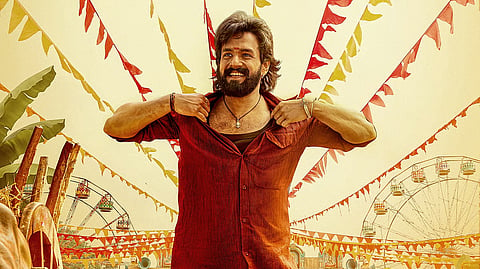
Coming to the performances, Akhil Akkineni delivers a sincere performance and shows noticeable improvement over his previous films. His rugged makeover suits the character well, and he performs particularly well in the climax.
Bhagyashri Borse is the surprise package of the film. She looks beautiful on screen and delivers a confident performance as Bharathi. The film gives her enough scope to showcase her acting ability, and she is likely to earn more opportunities. However, despite the performances, the chemistry between the lead pair lacks emotional depth.
Eswari Rao gets a substantial role and performs admirably. Kannada actor Pramod makes an impressive Telugu debut with a well-written character. Brahmaji appears in a refreshing avatar, while Sivaji, Sunil, Satru and the rest of the supporting cast perform adequately, although none of them get standout moments. Interestingly, throughout the film, there is hardly a single scene that leaves the audience saying "wow."
Thaman S's music is below expectations. The songs become major speed-breakers in the narrative, while the background score is only effective in parts, particularly during the latter half. The cinematography is good and captures the rural landscape and period setting beautifully. Production designer Avinash Kolla deserves appreciation for recreating the village ambience convincingly. The dialogues are decent.
Lenin falls short of expectations because of its weak screenplay and slow narration. Despite an interesting backdrop and a few decent twists, it ultimately turns into a routine revenge drama that offers very little novelty. Lengthy scenes, unnecessary lag and poorly placed songs further affect the viewing experience. While Akhil Akkineni shows improvement and Bhagyashri Borse impresses, the film lacks the emotional strength and gripping narration needed to make it memorable.
