
The debate around artificial intelligence has increasingly moved beyond questions of what the technology can create to what it should be allowed to create. For women in the public eye, that distinction can become particularly uncomfortable when AI tools are used to alter their appearance, sexuality or identity without consent.
Janhvi Kapoor has now joined that conversation, following the circulation of a manipulated video featuring her. Rather than limiting her response to the particular clip, the actor used the incident to speak about the larger problem of AI being used to manufacture images of women and then circulate them as entertainment.
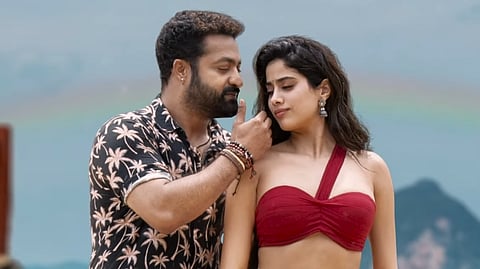
Janhvi has written a lengthy note addressing the misuse of her image in a morphed version of her popular Devara: Part 1 song ‘Chuttamalle’. She also thanked her co-star Jr NTR for publicly taking a stand against the circulation of the manipulated content, saying that such support matters to women facing similar situations. “It makes a difference to every woman,” Janhvi said while expressing her gratitude to NTR. The actor's response came after he condemned the misuse of AI and spoke against creating and circulating manipulated material involving women without their consent.
In her note, Janhvi questioned the tendency to dismiss such digitally altered content as harmless simply because it exists online. She pointed out that technology does not remove the personhood of the individual whose image is being manipulated, arguing that a woman's identity and body cannot become material for someone else to modify, sexualise or distribute without permission.
The actor also highlighted the gap between technological advancement and responsibility. According to Janhvi, the fact that something can be created using AI does not automatically make it acceptable to create or share it. She urged people to consider the human being behind an image before treating manipulated content as something amusing or inconsequential.

Her comments also addressed the way women are disproportionately affected by this technology. While AI-generated and manipulated content can target anyone, the creation of sexually suggestive or compromising fake images of women has become a particularly visible problem, with celebrities and ordinary social-media users alike finding themselves at the centre of such abuse.
Janhvi's note further questioned the idea that public figures somehow surrender control over their identities simply by choosing careers in the entertainment industry. Being an actor, she suggested, does not amount to giving strangers permission to digitally alter one's face or body and circulate the resulting material.
The episode also comes amid increasing legal scrutiny of AI-generated content involving Indian celebrities. Courts have in recent years dealt with cases involving the unauthorised use of actors' names, images, voices and likenesses, with personality-rights claims becoming increasingly relevant as generative AI makes digital impersonation easier.