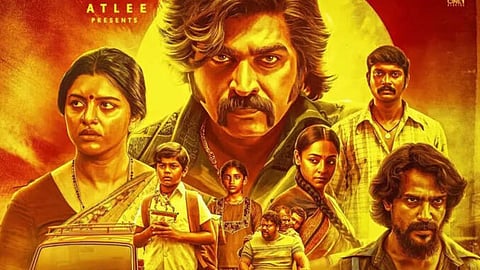


Director Balaji Tharaneetharan's Baththa gears up for its October 29 release on Netflix, and it is a good time to reflect on the important life lessons hidden in the film's intricate screenplay. The film seamlessly weaves these complex ideas into a universal story of a dreaded gangster and a small boy, without resorting to preachy sentimentality. This is what makes the film as deeply insightful as it is heartwarming to the hilt.
Be kind to people, whether you are a fearsome gangster or a small boy
Sabari, the little boy (Sai Prithviraj) at the heart of the story, eventually musters up some courage to free Baththa (Vijay Sethupathi) from the bathroom. Sabari shows kindness because the child can see through Baththa's rough-around-the-edges persona and find some innocence and vulnerability in the man child behind the monstrous exterior he exudes. Even when he knows the mayhem that Baththa can unleash once he walks out of the ‘prison’ of his own making, Sabari buys food for him every single day. Sometimes, a mundane gesture is all it takes to plant the early seeds of redemption. An act of kindness can go a long way towards breaking the cycle of fear.
Drop your facade only in front of those closest to you
It is interesting how Baththa maintains the facade of being a tough guy in front of his goons even as he starts a journey of redemption following his excruciating days in the restroom. This is partly why he tells them to look for the person responsible for keeping him locked up there, not necessarily because he feels vengeful. Elsewhere, he shows his true vulnerable self to his wife and accepts Sabari, knowing what the boy did to him, letting his guard down and owning up to his own mistakes to them because he knows their value in life, unlike his gang of goons. Vijay Sethupathi captures this internal shift with effortless nuance, grounding Baththa’s transformation in genuine emotional truth.
Apologies are not just for others—they are for your own peace
One of the most delightful aspects of Balaji Tharaneetharan's screenplay is the way in which it delivers nuggets of wisdom through dry wit. When Baththa recognises the repercussions of his unruly ways on those around him, he decides to apologise to each of his old enemies. This elicits some of the biggest laughs in the film. This is not necessarily an elaborate act from Baththa to find out the person who has harmed him, although the film cleverly frames it through that prism of keeping one's friends close but their enemies closer. At a deeper level, Baththa senses the need to make peace with himself and his adversaries. Your past inevitably catches up, but true closure comes from restitution, not revenge. The film punishes Baththa for his misdeeds, making the redemption feel well and truly earned. In this aspect, Baththa is Devasuram in an alternative universe with a touch of Meiyazhagan.
Everyone has their fears and insecurities
In Baththa, it is interesting how everyone lives with a constant sense of fear for something or someone. The titular gangster carries the trauma of public humiliation for his singing from childhood and hence goes to the isolated bathroom at a secluded school building. Sabari hesitates for a long time to open the restroom and let Baththa go. His fears stem from the stories he has heard of the gangster and the image of the man beating up a person in the neighbourhood. Even Kannima (Lijomol Jose) fears for her husband's life when he goes missing for days on end, despite enduring domestic abuse from him. Her fear of missing him for good surpasses that of being at the receiving end of all the trauma. It is delightful how Balaji's screenplay tip toes through these nuances, avoiding potentially problematic areas while ensuring not to glorify the titular character.
An eye for an eye can make the whole world blind
At the heart of Baththa is this Gandhian principle, driving the deeds of its protagonists. Balaji's intelligent screenplay uses a supporting character to let Baththa realise the folly of his ways. When Sabari's father (Hari Krishnan) refuses to blame someone for hurting him, despite Baththa exacting revenge against the same man for the boy and his parent, the gangster faces his second biggest public humiliation. This unexpected grace forces Baththa to confront his own violent worldview, setting him on a true path towards salvation.