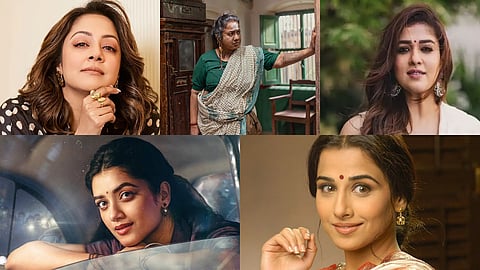

Every Friday, fortunes change in cinema. Even if you are the biggest sensation on the first Friday of the year, you might be forgotten by the last Friday of the year, if not the same month. The same holds good for fortunes that find a way to look up. One Friday, you might be a nobody, and the next, you are a sensation. This is an industry where hope is dangled in front of everyone, and it is seemingly one of the most democratic of mediums where every single person has a shot at becoming someone. Anyone can be somebody in cinema.
But then, it is also an industry where fragile egos rule the roost. The higher up you go, the more brittle your ego gets. And when a certain height is reached, many lose perspective. They surround themselves with people who would stroke their egos and give them a false sense of security. If a film of theirs flops, reasons ascribed to the same can vary from release dates, director’s inadequacies, producer’s lack of planning, audience’s lack of understanding, the weather, parking tariffs in the cinema halls, and if there isn’t anything else, they always have a special scapegoat readied for this occasion: the heroine’s LUCK.
Many a heroine’s career has taken a nosedive simply because she wasn’t perceived to be lucky by the industry. Before Parineeta launched Vidya Balan in Hindi, and she went on to become one of Indian cinema’s finest, she had a brief stint in the South. One of her films got shelved, and she was unceremoniously ousted from another simply because her horoscope didn’t have great things to say. While we are glad that things worked out in favour of Vidya Balan, it isn’t to say that this ‘unlucky’ tag is easy to shed. All it takes is a series of underperforming films to have that tag firmly plastered on a heroine. And more often than not, it is the industry’s way of satiating a hero’s ego.
Now, does the hero want this to happen? The jury might be out there, but for all intents and purposes of having a civil argument, let’s say they don’t want it to happen. Then, who is doing this? Who is creating the illusion that heroines are unlucky? Why are the fortunes of a film not riding on the story, screenplay, dialogues, art direction, music, editing, sound design, cinematography, finance deals, and the remuneration of some bigwigs? Why does it all come down to the fortunes of the female lead? Go on social media after the disastrous box-office returns of a big hero film, and it is easy to spot this narrative. A bunch of handles would list out the films starring the heroine, and how they have all bit the dust. Even if those films star the same hero, it is the heroine who bears the brunt of this narrative.
In many ways, the heroines who are pulled down by the narrative-setters know who is pulling the strings or what is fuelling this hate campaign. But the industry is so close-knit that it becomes increasingly difficult to acknowledge this orchestrated campaign. And then there are some people who, for inexplicable reasons, genuinely believe it is the heroine’s luck that determines the success of a film. Of course, once the success reaches the film, she isn’t given even a portion of the credit. It is as if the heroine were a version of Schrödinger’s cat. Till we know if the film is a success or a failure, she is kept in a box. If the film is dead on arrival, there is a scape-cat ready, and if the film is a success, people who didn’t have to feel suffocated inside the box swoop in and reap the benefits, while she is left to smile and move on, hopefully.
There have been many such cases recently, and one of the most startling involved Bhagyashri Borse. Just because her first couple of films didn’t perform well at the box office, she was written off as ‘unlucky’. While her competency in acting shone through in Kaantha, it wasn’t enough simply because the narrative was already being structured. The same happened with heroines like Pooja Hegde, and Shruti Haasan, who rightly pointed out that the hero of her ‘flop’ films never faced the same scrutiny. If a hero’s films aren’t working, his script choices are questioned, and rightfully so. Shouldn’t that be the yardstick for the heroines, too? If an actor has reached a point where they can say ‘No’ to a film, then questions about why they said ‘Yes’ are valid. But in a cutthroat industry like cinema, not everyone gets a say in how their characters are written and portrayed, and they wade through such films to reach a position where they can say ‘NO’. But not many actors reach that level of power.
This is also why the question of ‘shelf life’ for a heroine becomes even more profound. Why do we assume only heroes or male actors want to act until they die? Why is this passion not accorded to the heroines… despite so many examples right in front of us? Longevity isn’t accorded to actresses because the heroes who thrive on this, and have earned financial freedom and have more purchasing power, move on to younger heroines. So, in many ways, it is wrong to say heroines don’t have a ‘shelf life’. A heroine’s longevity, just like luck, isn’t just in her hands. So, if someone wants to make hay while the sun shines, and moves on to greener pastures, i.e., industries that pay her better, give her bigger opportunities, and celebrate her with a lot more fanfare, why fault her? Already, there is the pressure to be lucky and the clock ticking over their heads, because their heroes are just one calendar year away from moving on to heroines a few decades younger.
When Radikaa Sarathkumar headlines a film like Thaai Kizhavi, and it becomes the toast of the industry, she remains nonchalant about it all, simply because she has seen how the industry treats its women achievers. After giving multiple interviews to various YouTube channels, Radikaa finally sat down with anchor-actor Divyadarshini, who asked her about her female contemporaries. Radikaa let out a visible sigh of relief and expressed her happiness at being asked about the women she has worked with. How many male actors are asked about their female co-stars in interviews? How many heroes, unprovoked, talk fondly about their heroines?
Of course, these are rhetorical questions, but the bigger problems still plague the heroines of cinema. It is unfortunate that the heroines are forced to make peace with the fact that they only have a ‘good few years’ before they have to pass on the mantle. The heroes, who they started their careers with, have the space to refuse to grow old and choose co-stars that ensure this refusal is validated. Newer pairings are shipped, and older pairings are shipped out. One might argue that an actor is an actor, and it is their own wish to become mother-figures or elder-sister figures to the same heroes they ran around trees with. But this is another way of escaping a larger discourse on how age-appropriate characters seem to be thrust onto women in cinema. ‘How is she acting in such a role despite being a wife/mother/grandmother’ is a burden the women have to carry when their male contemporaries who do similar characters are never asked, ‘How is he acting in such a role despite being a husband/father/grandfather?’ But that’s the unfortunate truth of cinema that even the most progressive and powerful of voices fail to address.
Our biggest stars never question this status quo, and many stalwarts act as if such a thought never even crossed their minds. Why is a heroine’s longevity directly proportional to her willingness to forget that she was a leading lady once? It is financial freedom that allows heroines to act in the films they wish to and headline projects they would otherwise never be able to, and, more importantly, to stay away from films that do not align with their needs and cinematic vision. Look at the likes of Radikaa, Jyotika, or Nayanthara, for that matter. After being typecast, taking a sabbatical, or being written off, these actors didn’t just reinvent themselves on camera; they also gained financial freedom, allowing them to dictate their own terms. Being dictated by stars isn’t new to cinema, but it isn’t every day that a heroine does it. The industry is so used to listening to them say ‘Yes’, even if it is a grudging one, that it is often unable to hear a loud and vehement ‘No.’
So, the system fights back against these women. They label these actors as difficult. They create campaigns belittling the heroines and subject them to intense trolling. The slightest hint of trying to wring their narrative into their own hands is met with derision and calculated pushback. Those who fight back are standing tall against a system that rewards submission. This fight is also for the ones who submit willingly or otherwise. They are on their own, yet they continue to push their luck in their fight for longevity. It is personal, but a woman’s fight in any system isn’t just about the present. It is a reflection of a grey past, and a harbinger of a greener future, and on this front, our heroines have to do it all on their own because… in this fight against labels and for longevity, no hero is coming to save the day.
