
Unmadham Movie Review:
Shahi Kabir's films are most often based on borrowed ideas. Make no mistake, borrowed from real-life stories. Thanks to his former life as a police officer, the writer draws on a vault of stories that explore the often unseen side of cops, particularly their mental health. Unmadham is also cut from the same cloth, embroidered with a dash of his own experiences as an ordinary constable struggling to make it as a writer in cinema. But unlike Shahi's other works, this film also has an intriguing layer of supernatural elements, or at least, that's what the film wants us to believe. At one point, we even get a foreshadowing reference to Manichithrathazhu, the classic that expertly balanced supernatural and psychological ideas. Even when the climax tries to smartly dodge all the loopholes, it remains a fact that the ride was not all that smooth.
Director: Kiran Das
Cast: Kunchacko Boban, Lijomol Jose, Shyna Radhakrishnan, Kiran Peethambaran
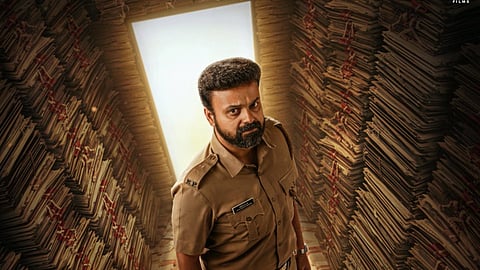
With Unmadham, Kunchacko Boban continues his lately discovered penchant for strong author-backed roles. The protagonist Shelly K (not Shahi K) is fed up with his police job, but clings on hesitantly only for his family's sustenance. Yet society, including his wife, mocks and insults him over his 'cinemakaaran' dreams, and you can see Kunchacko effortlessly embodying the body language of a worn-out, defeated man. With Shelly often ending up on the wrong side of things, the film tries hard to portray him as a victim of circumstances. However, that doesn't take away the fact that he is careless and irresponsible, both at work and home. It also justifies his wife's constant outbursts at him, even if it's at the risk of sounding a bit too harsh. It's a tightrope where the woman (named Sowmya, but nothing 'sowmyam' about her) could easily be vilified, but the nuanced writing and Lijomol's sincere performance are impactful enough to ensure we feel for her.
Even when things around him look bleak, Shelly's last straw of hope is a crime subject he tries to develop based on an unnatural death case that his colleagues believe to be cursed. But as fiction and reality begin to blur, the mystery tightens its grip on him, threatening to shatter his sanity. A cop on the verge of psychological collapse is Shahi's zone, which he aces, but it's when the film takes the investigative route that the wheels start coming off.
A recurring trope in Shahi's films is his protagonists' sharp policing instincts and their ability to instantly deduce crime scenes. Early in Unmadham, Shelly also gets one such moment when he concludes that a murder for financial gain has been staged as a suicide. When he casually shares his theory with his wife, she dismisses it as another of his random deductions. Shelly doesn't bother defending or convincing her; he simply moves on. But later, when a case puts his life and career in question, he does everything possible to crack it. However, the writing here needed to be smarter and more exciting rather than settling for dated resolutions. The narrative suddenly becomes hasty and excessively verbal. If observed closely, there are enough visual cues to suggest corporate foul play, but considering how intriguingly the conflict was structured, the findings are rather generic and tame.
Kiran Das makes a confident debut as a filmmaker, especially in the way he keeps the tension simmering through the first half, extracts strong performances, and executes some bizarre dream sequences that play out like a supernatural thriller, even if they tend to overstay their welcome. The latter half, however, is particularly overstretched, including a stylised fight sequence that just doesn't align with the film's overall tone and mood.
It is interesting how Shahi manages to address different facets of policemen's psychological traumas with every new film. Joseph showed how a policeman's sexual performance is affected by his profession. In Officer on Duty, we saw a shattered father being forced to relive his traumas. Here, Shelly's policing experiences have made him increasingly suspicious. All these are ideas pregnant with possibilities, but it's also true that some of his tropes are beginning to feel repetitive: a psychologically scarred policeman who is basically innocent but repeatedly victimised by the system or his corrupt seniors. Although Unmadham goes beyond these tropes to traverse newer terrains, the film is still short of being consistently engaging, largely because of the writing choices.
