
September 21 Movie Review:
Alzheimer’s is a sensitive topic to handle in film. It can’t be conquered by heroism or fixed with simple medicine. It changes the pulse of a household, alters relationships, and quietly tests the patience of those who remain. September 21 explores this emotional ground not as a medical drama or sentimental tearjerker, but as a tribute to caregivers and the unnoticed work of love they do.
Director: Karen Kshiti Suvarna
Cast: Priyanka Upendra, Pravin Singh Sisodia, Amit Behl, Ajit Shidhaye, Dilip Patekar, Ricky Rudra, and Ankita Jayaram
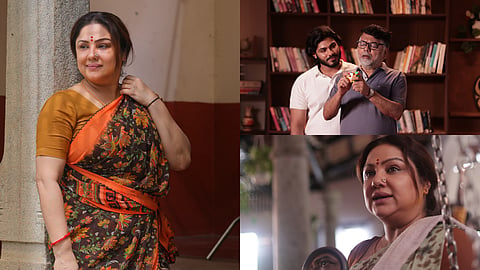
In this story, we meet Kamala (Priyanka Upendra), a caretaker burdened by her responsibilities. She juggles two children, an intrusive mother-in-law, and a careless husband who treats work and family as minor obligations. Her life is already stretched thin when she takes on the care of Raj (Pravin Singh Sisodia), a man navigating the confusing realm of Alzheimer’s. The film opens with urgency as Raj goes missing, prompting Kamala to launch a desperate search. The anxiety sets in quickly, especially since the film is rooted in recognisable social realities. Every few seconds, someone around the globe receives an Alzheimer’s diagnosis, and September 21 reminds us that statistics are realities in many homes and families.
Raj’s condition is shown not just through forgetfulness but through emotional geography. He remains trapped in memories of his wife, Sudha, convinced she is still in quarantine and waits for her return. He asks Kamala to tell Sudha to sing, insists she wear a mask, and watches songs on television, believing his wife is just out of reach. The film’s gentleness lies in how it honours this reality rather than trying to fix it. Pravin portrays Raj with touching innocence. He speaks of going to Mars, discusses God as if he’s continuing an ongoing conversation, misplaces items, flushes things away, forgets days, and gets unsettled by noise. One of the film’s sweetest moments occurs when he wants a spider’s web left undisturbed.
For Raj, meaning still exists even when memory fades. What stands out in September 21 isn’t just its subject but the perspective behind it. Director Karen Kshiti Suvarna, only 22, approaches Alzheimer’s with emotional intelligence and restraint. She avoids melodrama and resists the temptation to build scenes around manipulation. Instead, she focuses on the quieter aspects of caregiving: the repetition, misunderstandings, exhaustion, and dignity found within daily tasks. The maturity lies in refraining from making a 'serious issue film' and resisting the urge to oversimplify suffering. The film’s emotional conflict is embedded in caregiving itself.
Kiran (Ricky Rudra), Raj’s son living abroad, grows increasingly impatient and suggests moving his father to a care center. Through video calls and instructions about food and routine, he tries to manage love from afar, but will he realise that bonding requires close care? Samuel (Amit Bhel), Raj’s friend for forty years, opposes this decision, unable to accept companionship being reduced to institutional separation. Doctor Deepak (Ajit Shidhaye) serves as a kind bridge between medicine and emotion, knowing that treatment alone can’t fix loneliness or grief. While Pravin fully inhabits his role, the film truly belongs to Priyanka Upendra's Kamala. She gives a performance characterised by restraint rather than display. Kamala is caring but not saintly. She feels exhaustion, occasional frustration, and a painful awareness that kindness doesn’t eliminate financial struggles. When she admits to the doctor how hard caregiving is alongside her family responsibilities, the film acknowledges caregiver fatigue without judgment.
Karen Kshiti Suvarna also avoids glamourising illness. Raj’s confusion can be harsh. After causing chaos, he blames Kamala. A shadow can feel threatening, a written note can raise suspicion, and care itself can become emotionally draining. Kamala’s own home offers little in the way of a haven, with financial pressures and worries about her daughter’s future piling up. The screenplay sometimes revisits similar emotional themes involving Sudha and Raj’s confusion. Yet the sincerity remains hard to overlook.
In the end, September 21 suggests that Alzheimer’s doesn’t erase love; it rearranges it. Memory may shatter, names may vanish, and reality may drift away, but affection endures in gestures and devotion. Raj may forget many things, but love is not one of them. By reminding us of this, the film also gently shifts our focus to the caregivers, those who stand beside fading memories, bearing the emotional weight of loved ones slowly losing their identities, while quietly holding their lives together.
For all its thematic ambition, September 21 finds its emotional anchor in performance, with its actors lending flesh and fragility to a story about memory and loss.
