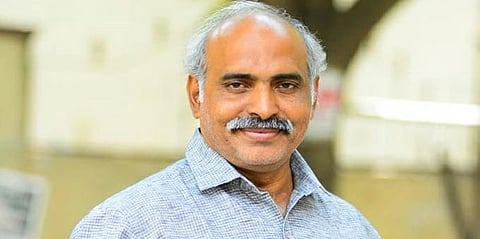

Known for taking up socially relevant subjects, Nandi Award-winning director Sunil Kumar Reddy has consistently carved his own path in Telugu cinema. Though his films are often made on modest budgets, they stand out for their raw honesty and strong social commentary. Over the years, he has won multiple Nandi Awards, including for films like Gangaputrulu and Sontha Ooru. Recalling his journey, he says, “Four of my films received Nandi Awards. That recognition encouraged me to continue telling stories that others hesitate to explore.”
His next film, titled Cockroach, is slated for release on March 6. As the title suggests, the film dives deep into the lives of people who exist on the fringes of society — criminals, contract killers, prostitutes, and even police officers who find themselves trapped in complex moral situations.
“I have always been drawn to stories that are real but rarely discussed. Many filmmakers prefer safe themes, but I want to tell stories that are uncomfortable, intense, and honest,” Sunil explains. The director reveals that Cockroach is based on real incidents and inspired by people he interacted with.
Having worked as a journalist earlier in his career, Sunil says he was able to approach the subject with sensitivity. “I met several criminals in Visakhapatnam, particularly in Gajuwaka. I spent time with them, listened to their life stories, and understood their emotions. I also interacted with police officers and women engaged in prostitution. I wanted to see their lives beyond society’s judgment.”
One of the most striking observations he shares is about dignity and perception. “When I spoke to some of the women working on the roadside, I realised that they did not see themselves as victims. They were proud of their profession because it helped them survive. Society looks at them differently, but they have their own sense of respect and purpose. I wanted to portray that honestly,” he says.
Sunil further clarifies that Cockroach is not a documentary but a commercial feature film with strong emotional depth. “I have not added unnecessary cinematic glamour. The violence you see is not for shock value. It is part of their lives. I am not romanticising it or glorifying it — I am showing it as it exists. It is raw, brutal, and personal.”
The film’s title carries symbolic meaning. “A cockroach survives under any circumstances. It thrives in dirt and darkness — conditions created by society itself. Similarly, these criminals are not born; they are shaped by circumstances. They are fighting for survival. That is why I chose the title Cockroach.”
Interestingly, the director has cast several fresh faces and even real-life individuals in the film to maintain authenticity. Members of his action team, including his stunt choreographer and three assistants, appear on screen performing the stunts themselves. “I trained them in acting after narrating the entire script. Their body language and reactions feel natural because they understand that world,” says the director.
Sunil also revealed that some real criminals and police officers appear in the film with due permission. “I approached the police department and explained the script. They had no objection and supported the film. Their presence adds credibility.”
The film received an ‘A’ certificate from the Censor Board after certain discussions. “They initially objected to a few violent scenes. But I explained the context and the purpose behind them. This is not violence for entertainment; it is part of the narrative’s realism. My sincere request is that sensitive viewers and family audiences should avoid it.”
Apart from crime and survival, Cockroach also features an unconventional love story — between a contract killer and a prostitute. “We usually see love stories set in colleges or comfortable environments. But love can bloom even in the harshest circumstances. For them, their love feels pure and meaningful,” he says. The cast includes Teertha, who earlier appeared in Sontha Ooru, along with Abhilash Sunkara, Premasan, and Naveen portraying contract killers inspired by real-life figures.
When asked why he is drawn to such intense subjects, Sunil reflects on his earlier works. “In Gangaputrulu, I focused on the lives of fishermen in Coastal Andhra. For another project, I explored the struggles of Gulf migrants. I spoke to hundreds of victims before writing those stories. I want to tell stories that are ignored or overlooked.”
Looking ahead, Sunil is already preparing for his next film titled LGBT, which will focus on discrimination and legal issues faced by the transgender community. “There are serious gaps in how crimes against transgender individuals are handled. I want to address those realities through cinema. Just like Cockroach, it will be rooted in truth,” he signs off.
