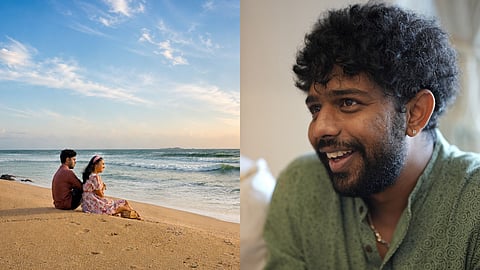

Karthik Sharma does not speak about directing his debut with the impatience of someone chasing a long-delayed dream. If anything, there is caution in the way he approaches the subject. For a man who entered cinema as a child and grew up around sets, microphones and recording studios, direction, strangely enough, was the one ambition he refused to rush, finally realising it through his directorial debut, Bhavaantara. “I always wanted to direct, but I did not know whether I was ready.” That uncertainty stayed with him longer than the ambition itself. Recognised as a child actor in films such as Veera Kannadiga and Magic Ajji, Karthik Sharma appeared in over 35 films and television serials. He also dubbed for child actors before finding another identity in music. Having trained in cinematography and audio engineering at AR Rahman’s institute and spent years moving between Bengaluru and Mumbai composing title songs for television dramas, the medium, in many ways, became his second school.
“I have done title songs and music for more than 100 TV serials and shows. It kept me creatively occupied, but somewhere in the background, I had this script with me.” That script remained with him for nearly 12 years before taking shape as Bhavaantara. Interestingly, he says the film did not begin with commercial positioning in mind. “It started as an arthouse film. That was the original instinct. But while making it, we realised the story had emotional accessibility beyond that space. We did not change the core; we only understood better how to present it.” The film, based on real-life incidents that happened in Tamil Nadu, explores transgender lives and transitions. Sharma is careful while speaking about the subject, perhaps aware of how easily stories around gender identity are reduced to messaging. “At its heart, this is a love story. The transgender world is part of the setting and emotional truth of the film. But I did not want to make something that looked at them from the outside. I wanted intimacy. To the best of my knowledge, this kind of story has not been explored in South Indian cinema.”
Bhavaantara also becomes a personal film in more ways than one. Sharma has written the story, screenplay and dialogues, and also composed the music, and plays a prominent role in the film. For someone who has moved across departments for most of his career, multitasking feels less like ambition and more like habit. “People know me as a child actor and a composer. Now, I am presenting myself as a director. I hope the encouragement I received in those phases continues here as well.” The music, unsurprisingly, remains close to him. The film features five songs, with Hombale Music acquiring the audio rights. “It is encouraging when a banner like Hombale comes behind a film like this. This is not mounted on a massive budget. So, when they showed interest, I felt it was the content speaking for itself.”
Filming is complete; the teaser has already been released, and censor formalities are next. Shot across Udupi, Bengaluru and Tamil Nadu, Bhavaantara stars Tanvi Rao alongside Sharma, with Pranav Sridhar, Srivaishnav, Veda Rao and Bhanu in supporting roles. “You can want something for years, but wanting alone is not enough. I waited till I trusted myself with the story,” he signs off.
