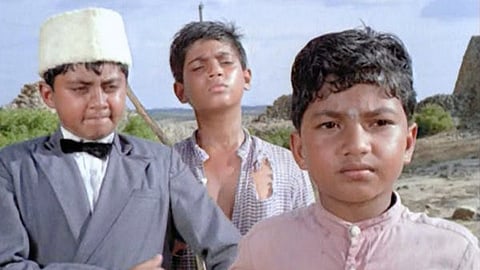

Four decades after it first aired, Shankar Nag's timeless adaptation of RK Narayan's stories continues to remind India that the greatest nostalgia is often found in the simplest tales.
There are television shows that entertain. Then there are those rare creations that quietly become a part of our collective memory. Malgudi Days belongs firmly in the latter category.
Forty years have passed since the series first premiered on Doordarshan in 1986, yet all it takes is the opening strains of LY Vaidyanathan's unforgettable 'Taana Naana' theme to transport millions back to a slower, simpler childhood. Few Indian television productions have aged with as much grace.
Based on RK Narayan's beloved fictional town of Malgudi, the series found its most enduring storyteller in Shankar Nag. What could have been a faithful literary adaptation instead became a masterclass in visual storytelling. Nag didn't merely recreate Narayan's world; he made audiences believe Malgudi was a place they had once visited.
Ironically, Malgudi never existed. But in Karnataka's rain-soaked village of Agumbe, Shankar Nag found its soul. The winding roads, old tiled houses, mist-covered hills and lush greenery lent the fictional town an authenticity that no studio set could have replicated. Even today, visitors flock to Agumbe to see the homes and locations immortalised by the series, a testament to the lasting magic of Nag's vision.
Then there were the people who inhabited this world. Master Manjunath's Swami became the face of childhood innocence, while actors like Anant Nag, Girish Karnad and Vaishali Kasaravalli enriched the stories with warmth and quiet realism. There were no larger-than-life heroes, only deeply human characters navigating life's small joys and disappointments.
And, of course, there was the music. LY Vaidyanathan's iconic title composition remains one of Indian television's most recognisable themes. It wasn't elaborate or grand. It simply lingered, becoming inseparable from the world of Malgudi Days. Even today, a few notes are enough to evoke memories of Sunday mornings and family gatherings around the television.
Four decades later, Malgudi Days is no longer just a television series. It is a cultural landmark that continues to bridge generations. Long after its first broadcast, Shankar Nag's dream still lives on, proving that stories rooted in honesty, simplicity and humanity never really grow old.
