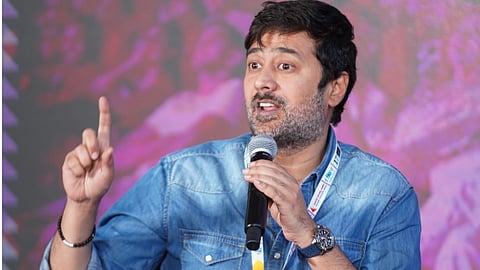

At a time when filmmaking is becoming increasingly resource-heavy, actor-director Rahul Ravindran is advocating for one simple yet powerful principle — preparation. Speaking at the 17th Bengaluru International Film Festival, Ravindran emphasised that clarity in writing is the foundation of clarity in filmmaking.
Addressing audiences during a Master Class session, the director stressed that directors must visualise their films thoroughly before stepping onto a shooting floor. According to him, filmmaking should not be an exercise in improvisation driven by circumstance, but rather a process shaped by careful design.
“Cinema is a very expensive art form. Efficiency is extremely important,” Ravindran said. He explained that shooting excessive footage in the hope of discovering the film later in the editing room often leads to unnecessary expenditure. “If you shoot enough material for two films and finally use footage for only one, the additional time, money and effort simply go to waste. A bound script is crucial before going into production,” he noted.
While acknowledging that there are filmmakers who build scenes organically on set, Ravindran pointed out that even such approaches are rarely spontaneous in the truest sense. He cited the example of directors known for evolving scenes during production but added that their flexibility is backed by extensive groundwork. According to him, improvisation works best when it grows from preparation rather than replacing it.
Beyond technical and creative planning, Ravindran also spoke about the emotional intelligence required to helm a film set. He highlighted empathy as one of the most vital qualities a director must possess. Stressing the importance of maintaining dignity within a collaborative workspace, he remarked that filmmaking is not about command and control.
“Shooting a film is not fighting a war,” he said, urging directors to practice patience and respect. Ravindran emphasised that every member of a film crew contributes to the storytelling process and deserves equal treatment. Creating a compassionate working environment, he believes, not only improves morale but also enhances creative output.
Drawing from his own journey as a filmmaker, Ravindran explained on how careful writing and structured preparation have shaped his projects, including his recent directorial ventures. For him, directing begins long before the camera rolls, it starts on paper, where the film truly finds its voice.
