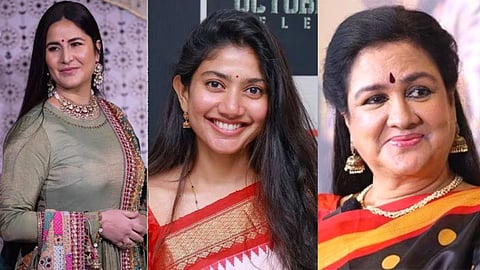

Even in 2026, social media remains an unforgiving space for film stars in India, particularly female actors. A section of the audience erupted in frustration the moment Katrina Kaif's postpartum pictures dropped on the internet. "She is finished," one user wrote with scathing sarcasm, pigeonholing her into an impossible aesthetic standard. Ironically, when Katrina Kaif was younger, the same audience used to objectify her, completely ignoring the fact that she has delivered commendable performances in films such as Welcome, Singh is Kinng, Ajab Prem Ki Ghazab Kahani, Zindagi Na Milegi Dobara, and Zero. Being a film star does not make you inhuman; being an audience member should not either.
When male actors age, gain weight, or go through personal crises, society often frames it through the lens of experience, maturity or just normal biology. When female actors undergo the same, we penalise them for failing to uphold a rigid standard of beauty. For us, they must always have flawless looks, maintain moral and ethical purity, and deliver sheer perfection in their performances. It does not matter whether one is an acclaimed actor such as Sai Pallavi; according to the internet, she is not suited to play Sita as she does not fit their glamour standards. Conversely, male stars also face casting skepticism, but history shows their critiques disappear the moment box office numbers come in.
Female actors cannot show their vulnerability or express their trauma online in ways they wish to without facing immediate public interrogation. Why do these actors have to explain what they post on their own social media? Similarly, private choices and relationships instantly become public discourse when female stars are part of the conversation. Even if ‘fault’ exists, why should the woman bear the brunt of the abuse? Even a highly respected actor such as Urvashi faces fierce backlash for publicly criticising an anchor. Such criticism may deserve to spark debate, but why does a male actor of equal standing escape accountability after delivering a similar opinion on a public stage?
When senior stars, such as Nandamuri Balakrishna, push co-stars or make derogatory comments about women on stage, their fans laugh it off as 'swagger,' and their box-office power remains the same as before. Female stars offering even mild professional feedback, meanwhile, become arrogant in the eyes of society. We weaponise her personal life history to help validate our outrage, while male peers with more flawed histories remain untouched by public discourse. Why? Because such backlash stems from deep-seated societal double standards, outrage driven by algorithms, and a media environment that profits from policing women.
Even in professional terms, we are more forgiving of male stars in India. For example, there is a tendency to blame the female actor for a film's failure, even if she has little agency in the story. We routinely brand top heroines with derogatory 'bad luck' labels following box-office failures. On the other hand, male stars can afford to have a string of underperforming films, and it would not matter much in the eyes of the audience. We give male stars, who carry the bulk of the film's budget and more creative control over it, a free pass under the guise of "temporary box-office slumps”.
